
Refrigerator Leaking Water? Find the Source Before It Costs You
Refrigerator leaking water in Campbell? Puddle under the fridge or pooling inside — a clogged defrost drain or cracked line. A tech traces it to the source and stops it before it ruins your floor.
Licensed & insured — we connect you with verified local pros
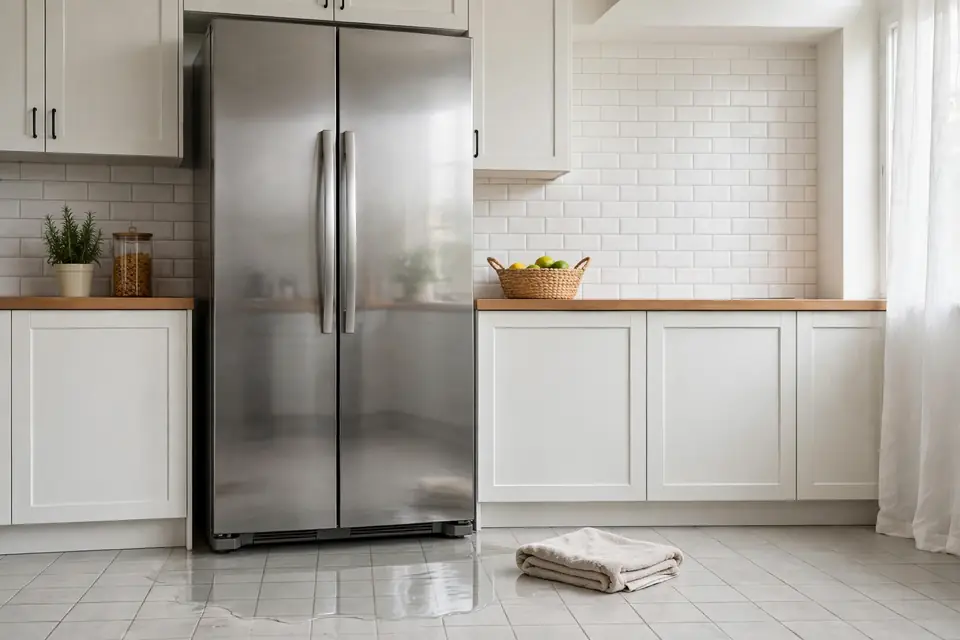
"A tube on the back of my refrigerator has a hole in it, and it's leaking." That's a real caller, word for word. Another one we hear all the time: "there's a leak in the water line going to the ice maker." If that sounds like your kitchen right now, you're in the right place.
A refrigerator leaking water looks small and turns expensive. A slow drip can warp hardwood, feed mold behind the kick plate, and nudge your water bill up while you mop around it. The fix starts with finding the source — five or six different causes, each with its own repair.
The Usual Suspects: Where Fridge Leaks Actually Start
A clogged defrost drain.
Every frost-free fridge melts frost off its coils on a timer, and the water should run down a little tube into a pan underneath. When it clogs, water pools inside the fridge or spills onto your floor. Water under the crispers? Suspect number one.
A cracked water supply line.
The thin plastic or copper line feeding your ice maker and dispenser gets brittle with age. A visible hole, a steady drip at the back of the fridge. Shut the little valve behind the fridge if you can reach it.
A failing water inlet valve.
The valve that fills your ice maker can start seeping even when closed — a damp spot that appears, dries, and returns. It gets blamed on "condensation" until somebody tests the valve. A puddle that keeps returning to the same spot means check the valve first.
A worn door gasket sweating condensation.
When the rubber door seal tears or loses its grip, warm kitchen air leaks in and meets the cold — that's condensation, running down and pooling. Moisture along the door frame first, then drips in front of the fridge. No soft suction pull when it closes? The gasket is talking to you.
A cracked drain pan.
The shallow pan under the fridge catches defrost water while it evaporates. Plastic pans go brittle and crack — then every defrost cycle drips onto the floor. It leaks on a schedule: a fresh puddle every day or two, dead center under the fridge.
A loose water filter housing.
If your fridge has an in-door filter, the housing it twists into can crack or its seal can wear. Then it drips — sometimes only when the dispenser runs, sometimes constantly. Check for staining around the filter area first.
What Not to Do While It's Leaking
What Not to Do While It's Leaking
- Don't just mop it up and move on. A returning leak damages what you can't see — subfloor, baseboards, behind the kick plate. Find the source, or call someone who will.
- Don't yank the fridge forward hard. A sudden pull stresses the water line and drain connections. Slide it gently, straight back.
- Don't ignore water near the outlet. If the puddle reaches the wall outlet, don't touch the plug with wet hands — flip the breaker and call us.
- Don't run the dispenser to "test" it when the leak is at the back. You'll only add water to the problem.
- Do shut the supply valve behind the fridge if you can reach it. It buys you time without hurting the fridge or your food.
How a Tech Tracks a Fridge Leak to Its Source
Leak diagnosis is detective work, and there's an order to it:
We read the water first. Clear water under the middle points at the defrost drain or pan. Water at the back points at supply or valve. Staining around the filter points at the housing.
We check the defrost drain. The tech pulls the freezer's back panel and looks down the drain tube — clogs and ice dams show up fast. Cleared and flushed so it doesn't re-clog.
We pressurize the water line. With the supply on, the tech watches every inch of line and every connection. A line that only leaks under pressure won't reveal itself any other way.
We test the inlet valve. A meter plus a fill cycle shows whether the valve seals shut or seeps. A seeping valve gets replaced — not "monitored."
We inspect the gasket and the pan. Door seal all the way around, drain pan underneath — the quiet culprits get checked before we call it done.
Then the report: where your water was coming from, the fix, the price — before any work starts.
How Fast a Fridge Leak Needs Attention
Water spreading across the floor — especially on wood or laminate — can't wait. Shut the supply valve and call. Water near an outlet — same urgency, flip the breaker first. A slow, recurring damp spot — you've got days, not hours, but don't let it ride for weeks; subfloor damage and mold grow quietly. Water only inside the fridge, under the crispers — that's the defrost drain, the least urgent of the bunch, but clear it before it spills over the front.
Open Mon–Fri 8am–8pm, with same-day (subject to availability) for the urgent ones.
Leak or Something Else? How These Fixes Connect
Water problems travel in pairs:
- Leak in the water line going to the ice maker? The ice maker side lives on our ice maker repair page — same water system, different failure. - Water pooling in the freezer and freezing into sheets? Often a drain problem with a freezer twist — our freezer repair page covers it. - Leaking and not cooling right? The two may share a cause, like an iced-over drain — start with refrigerator not cooling and mention the leak when you call.
From Puddle to Dry Floor in Three Steps
Step 1 — You show us the water. Where's the puddle? Constant, or does it come and go? A photo when you book can save real diagnostic time.
Step 2 — We trace it to the source. Drain, line, valve, gasket, pan, filter housing — the tech works the list until the water's path is found and proven, then quotes the fix upfront.
Step 3 — The leak stops, and stays stopped. We fix the actual source — not the symptom.
Frequently Asked Questions
Stop the drip before it becomes damage.
Call Campbell Fridge Pros. We'll find the source, quote it upfront, and same-day (subject to availability) is available when the water can't wait.
Call (408) 539-4685